
Alumnus, Class of 2010, Financial Management
Founder of Yunlang Trading Limited (Hong Kong registered)
No dramatic comeback story. Just real, steady growth. From BNBU startup competitions to building businesses across agriculture and trade. From a cramped room in Shenzhen to running multiple companies with ease. As a 2006 Finance alumnus and one of BNBU's first entrepreneurship mentors, Li Chixinran has learned by trying and failing, grown by doing, and turned every experience into fuel for the future.
Campus Beginnings: An Unfulfilled Competition That Lit the Entrepreneurial Spark
Li Chixinran's first taste of entrepreneurship came from a campus startup competition in 2009. As a junior, he and his team won the BNBU competition with a plan to open a restaurant called “Crossroads of Food”. But the project was put on hold indefinitely due to reasons beyond their control. “We couldn't just sit around, right?” he recalls. A senior student about to graduate asked him to join him in starting a board game cafe. “Instead of doing nothing, let's do something real.” He brought in two classmates, pooled some money, and the four of them rented a small space. Li helped run operations and handle shares. The board game cafe opened. It was his first real hands-on attempt at starting a business.
What was even more surprising was that his club experience helped him discover his financial skills. As badminton club president, he managed over a hundred members, negotiated stadium access, adjusted schedules, and through careful budget planning, saved nearly seven thousand yuan.
Also, during his time with Enactus, he received close guidance from teachers like Karen Lee and Yang Rongzhen. They took the team to competitions and taught him how to write a strong project report, reviewing every line from structure to data. “That was the first project report of my life,” he says with warmth. He believes BNBU gave him the greatest support, both material and spiritual. The campus nurturing helped his entrepreneurial seeds break through the soil.
The Hong Kong "Cage Home" Years:
How an Independent Founder Went Back to Being a “Student” in a State Enterprise
After college, Li Chixinran started with basic sales jobs, working in various private companies and small startups. He slowly realized how narrow his college mindset had been. “If you don't know how to be an employee, you won't be a good manager. Without learning the ropes, you cannot run a good company.”
In 2013, his life took a sharp turn. To end the long-distance relationship with his wife, he gave up studying wine in France and moved to Hong Kong instead. He brought two “hard currency” items: a Hong Kong university degree and a WSET Level 3 certificate. In 2013, fewer than 100 people in China had this certification. He had earned it while working in the wine industry.
Life in Hong Kong was cramped. He and his wife lived in a tiny subdivided flat in Mong Kok, just five or six square meters with a bunk bed. The kitchen, toilet, and shower were all crammed into one corner. When his mother visited, she broke down in tears the moment she walked in. He comforted her, saying, “It's better than Shenzhen.”
In Shenzhen before that, he had shared an apartment. His roommate suddenly left without notice, leaving Li to pay the 2,200 yuan rent alone. His salary was 3,000 yuan a month. After deductions, only 2,750 remained. His daily commute cost 6 yuan. At his lowest point, he picked discarded vegetable leaves from the supermarket to cook and eat.
Job hunting in Hong Kong, he posted his resume online. Unable to speak Cantonese, he struggled through interviews with his not very fluent English. Luckily, he got a Quality Migrant visa and joined an American owned trading company. There, he learned how an American company operates.
2015 was his most confused year. He did not know what to do next in the face of industry struggles. He could not see a clear path. The birth of his first child added more pressure, pushing him to seek growth and create wealth. Following advice from successful figures, he joined a state-owned enterprise. That decision opened a new door for him.
“I believe high income comes from high cognitive ability. So, I decided to go to a state-owned enterprise to learn.” At first, Li Chixinran, used to freedom, struggled with the rigid, by the clock work style. “Even if you are doing something for the company's good or saving them money, you still have to file a report first. That hit me hard at the time.”
Li Chixinran once thought rules and processes were a waste of time. But over the next seven or eight years, he learned that processes actually matter a lot. “Most companies don't pay enough attention to processes. For larger companies, processes are critical. Management levels are hierarchical. For a chairman to understand and control everything, they need proper processes. This way, everyone does their job. No one oversteps or slacks off. You can't see this as just an employee.”
In his eight years at the state-owned enterprise, Li Chixinran learned how large companies are run. He also gained exposure to new fields and a clearer view of the business landscape. He began trading commodities and understanding global supply chains. This gave him new ideas for his own business. “At the SOE, I learned a lot. It broadened my vision and network. These connections didn't directly help me. They showed me that your cognitive ability sets the limit on what you can achieve.”
The 2022 Fire Crisis: What Burned Was Inventory, What Awakened Was Risk Control
On the startup road, surprises always come. In 2022, Li Chixinran took a big hit. He imported 2.5-million-yuan worth of wagyu beef. After paying for the goods and taxes, the shipment was stuck in cold storage due to the pandemic. Worse, the warehouse also held smuggled goods from others. To avoid inspection, someone set the warehouse on fire. His legitimate products were destroyed too. In an instant, he lost both his goods and his money. The total loss was over 4.7 million yuan.
“I started to panic,” he says. He had just bought a home in Hong Kong, and his cash flow was cut off. From 2022 to mid-2024, he survived on borrowed money. The pressure was huge. But this crisis completely woke him up. Before, with a small business and youth on his side, he didn't think much about risk control. He acted on gut feeling, without realizing how important risk management was. Now, he uses the process driven management he learned at the state-owned enterprise to reduce risk. He also assesses risk before making decisions. He seeks advice from senior industry figures and analyzes projects with his wife, preparing contingency plans as thoroughly as possible.
“Risk control is always there. Business always has risk. Every decision you make, you need to consider the possible risks. But you also need to know how much you can handle and where your limit is. If I decide to go ahead, I still will. I just gather all the information first before deciding,” Li Chixinran says. These lessons from experience have all become stepping stones. After the crisis, he explored new areas to deal with his situation. He successfully raised 15 million yuan to invest in a company, and also began venturing into more fields.
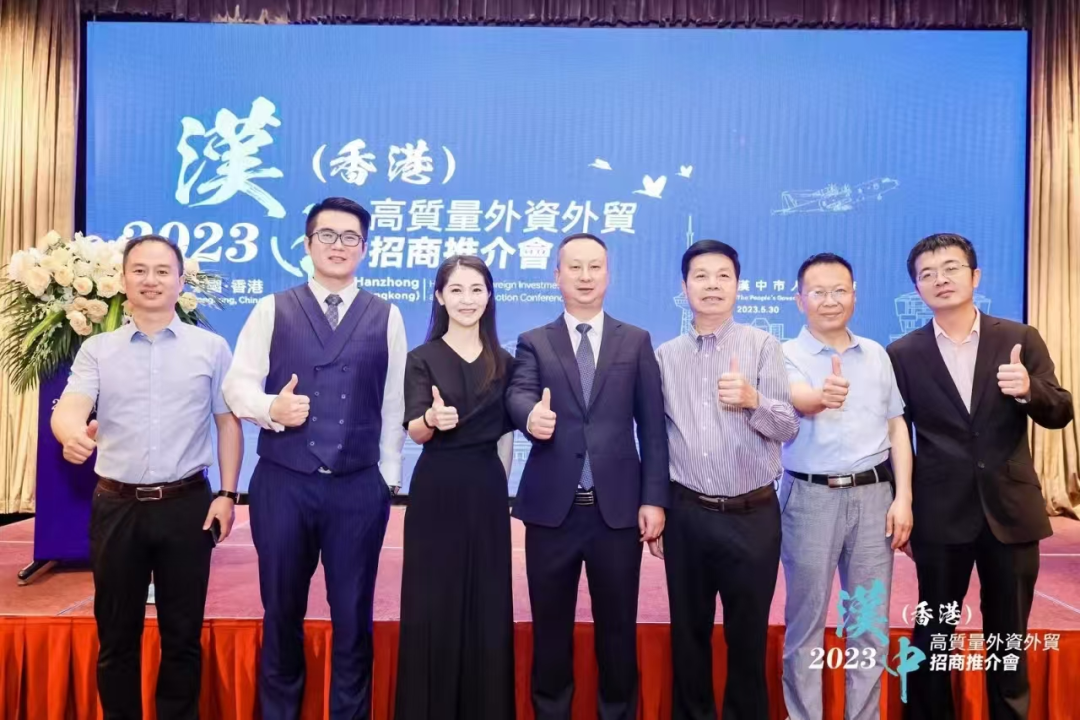
A work photo of Li Chixinran. Li Chixinran is the second from the left.
Don't Try to Be the Boss
Running a Business Is Like Getting On With Life
Li Chixinran now runs a Japanese pepper farm, trades medicine and health products, and manages a pet platform. Asked how he spans so many fields and finds so many things to try, he says his startup mindset is “not being the boss”. He laughs and calls it his “living day by day” philosophy.
“Everyone overvalues what they put in. You need to learn to 'lose a little.'” In his companies, Li rarely plays the “boss”. Partners usually take sixty to seventy percent. He takes thirty to forty. “Running a business is like getting on with life. Find a partner who runs the company like their own home. I cover what they miss. That's how we make things work and last.”
In managing staff, he learns from “raising kids”. He believes in “two-way feedback”. Instead of “good job”, say something specific. “You spent three hours solving that client's logistics issue. That patience matters.” “People need recognition, but they need to know what they did right, so they can keep going the right way,” he says. When his kid plays games, he asks for a glass of water, then says, “You stopped your game to help me. That was very thoughtful.” The child becomes more willing to help. Using this feedback at work has boosted motivation and built a positive culture. “You have to let your employees know their efforts are seen.”
Tattered clothes, but a sky full of stars. That is how Li Chixinran sums up his startup journey. From the board game cafe at BNBU to his current trading business, he took no shortcuts. He just made every step count. The shelved projects, the cramped apartments, the crises he survived, all became the road beneath his feet. To students thinking about starting a business, he says don't do it blindly. Don't do it just to escape society. “First, figure out why. Once you know, then go.”
Written by Sun Mingxi, Class of 2023, Media and Communication Studies, BNBU.
【Company Introduction】
Yunlang Trading Limited (Hong Kong Registered)
Yunlang Trading Limited (Hong Kong Registered) was established in 2021 as a comprehensive service provider specializing in end-to-end global supply chain management. The company's operations cover three core areas: lean production and resource integration, smart logistics and warehousing distribution, and omni-channel sales with platform enablement. It is committed to delivering seamless global supply chain solutions to its clients. Guided by the values of “professionalism, efficiency, and mutual benefit”, the company serves multiple trading countries and regions, helping partners enhance their core competitiveness.
Industry: International Trade and Integrated Supply Chain Services
Location: Hong Kong
Entrepreneurial Alumni Stories
Share your story. Your alma mater remembers.
Whether near or far, your time at BNBU is a treasure we all share. We look forward to hearing your unique stories. To be interviewed, please contact: ic@bnbu.edu.cn