Alumnus, Class of 2012, Finance. A 2012 BNBU alumnus, cross-disciplinary entrepreneur, and explorer of advanced manufacturing and education technology
In 2012, sitting in a finance classroom at Beijing NormalUniversity–Hong Kong Baptist University (BNBU), Wu Tong learned how to systematically analyze a company’s financial statements for the first time. He could hardly have imagined that, a decade later, he would be standing on the factory floor of a manufacturing company, studying not balance sheets and financial figures, but circuit diagrams and mechanical structures.
The distance between understanding the flow of assets and understanding how a machine operates may seem enormous. But BNBU gave him the underlying skill. Yet for Wu, the underlying skill is much the same: the ability to learn quickly in unfamiliar territory and find answers by tackling real problems.
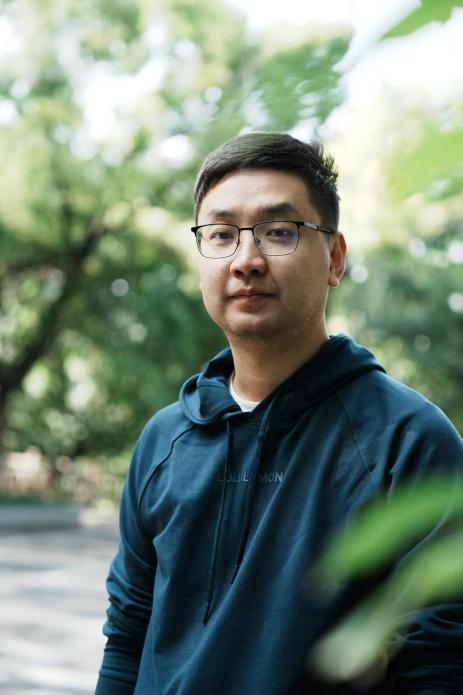
A professional photo of Wu Tong
Crossing the First Boundary: From Finance to Education
When Wu was preparing for the college entrance examination, finance was one of the most popular fields of study. He enrolled at BNBU and majored in Finance, a program that attracted considerable attention at the time. After completing his undergraduate degree, he went to the United States to pursue a master’s degree.
When he returned to China in 2014, he had no shortage of career options. Yet instead of entering the financial industry, Wu walked into an interview room at EF Education and became a course consultant.
Talking about this decision,his reasoning was straightforward: recommending an education product that could genuinely help parents and students was meaningful in itself. Compared with finance, he preferred work that allowed him to create tangible value. He was looking for a career where he could feel that value firsthand—even if that meant starting from the ground up.
The seven years Wu spent at EF became a period of solid and sustained growth. He progressed from a frontline course consultant to a campus manager and eventually joined the Asia-Pacific headquarters management team. Along the way, he immersed himself in unfamiliar fields, including child psychology, educational methodologies, team management, and cross-departmental collaboration. He set clear goals for himself and worked backwards to map out the path to achieving them. In the end, he reached those goals—not only successfully, but faster than he had expected.
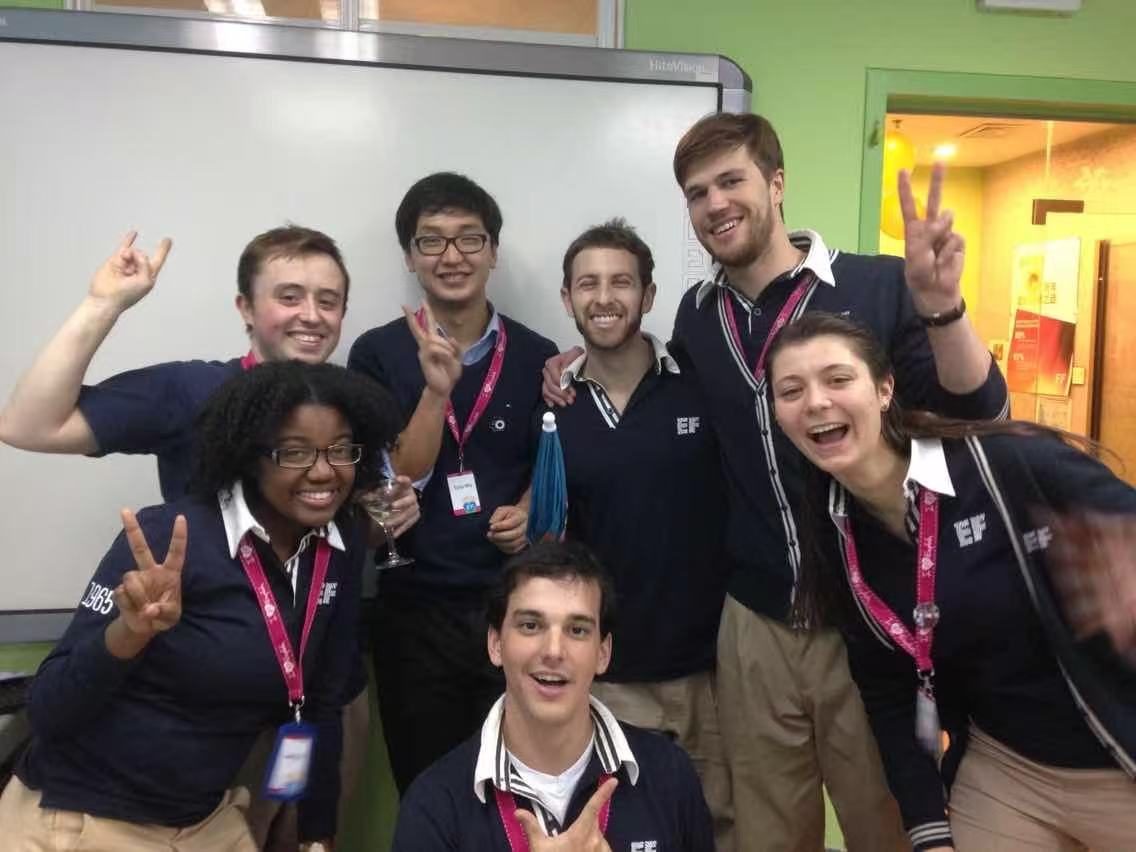
Wu Tong at EF Education (third from the left)
More importantly, the experience helped him develop what he considers his most essential “survival skills.” Communication, he learned, is not simply about having the right script; it is about building trust and understanding people’s needs. Management is not merely about assigning tasks; it is about integrating resources, solving complex problems, and bringing people together.
These skills would later become his most reliable foundation whenever he entered a completely new field.
Crossing the Second Boundary: Rebuilding from the Ground Up in Manufacturing
In 2021, family circumstances brought Wu back to Keevensun, the manufacturing company founded by his father. The company specializes in customized automation equipment for industries including energy and aviation.
Suddenly, stacks of mechanical drawings, unfamiliar circuit symbols, and technical terminology replaced the educational systems and sales reports he had once known so well. Faced with the roar of machine tools and the complexity of precision controllers, much of his previous experience seemed to have to start from zero.
“I literally started from scratch. I didn’t understand anything,” Wu recalls.
But the pause did not last long.
He once again activated a method he had become familiar with during his years at BNBU: when faced with the unknown, the first step is always to learn.
He began with foundational textbooks such as Electrical Engineering and Principles of Mechanical Engineering. The office lights often stayed on late into the night, with pages covered in notes.
The factory floor became his second classroom. Working alongside experienced engineers, he asked about every technical detail: Why was this particular sensor selected? Why was the control logic designed this way?
When equipment malfunctioned at a client’s site, Wu was no longer simply the manager responsible for relaying the problem. He worked with the technical team to study drawings, analyze data, and trace the underlying cause of the failure. Only after understanding the mechanism would he return to the client with a solution.
There was no shortcut.
“You just have to work through it,” he says. “If you don’t understand it the first time, read it again. If one person can’t explain it clearly, ask someone else.”
Gradually, circuit diagrams began to reveal the logic behind a machine’s movements. Technical parameters that once seemed abstract became concrete indicators of product performance.
The newcomer who had initially listened quietly from the sidelines eventually became someone capable of raising key questions in technical discussions and articulating product advantages clearly in business negotiations. Even veteran technicians on the factory floor began consulting him about process improvements.
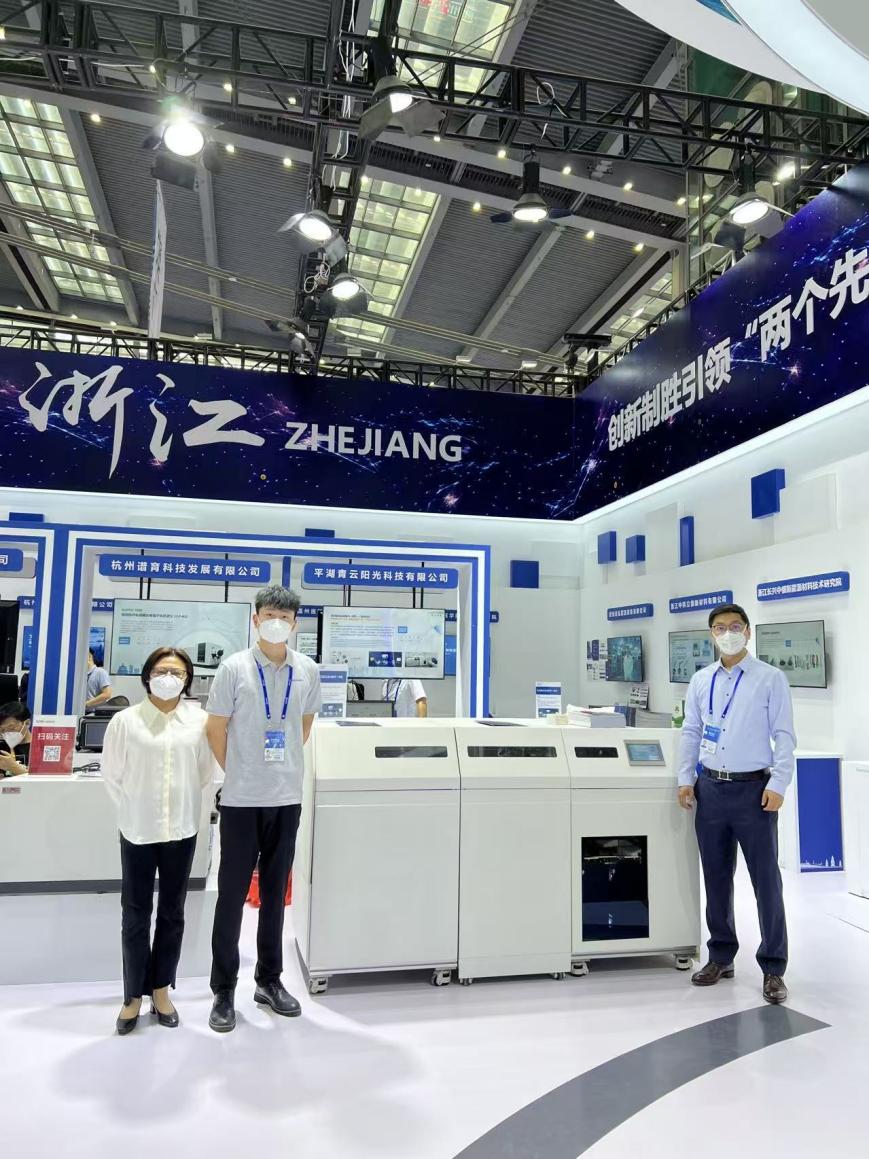
Wu Tong leading the company at an exhibition (first from the right)
“Every challenge has to be overcome one step at a time,” Wu says.
Looking back on this difficult transition, he believes that what carried him through the “technical desert” was not innate talent, but a mindset he had developed at BNBU: nothing is impossible to learn if you can find the right way to learn it.
That belief allows him to approach unfamiliar territory as a problem to be solved. Instead of being overwhelmed by a complicated new field, he breaks it down into concrete questions, mobilizes the resources around him, and works through them one by one.
Crossing the Third Boundary: Using Technology to Reimagine the Future of Education
As the manufacturing business entered a more stable phase, Wu did not stop exploring.
Education—the field where his professional journey began—remained an important part of his vision. Outside the factory, he and several partners began a new experiment: bringing technology into educational practice.
The idea grew out of concrete observations.
His experience at EF had left him dissatisfied with a common problem in the educational travel market: experiences that involve plenty of “travel” but not enough “learning.” At the same time, the rapid development of artificial intelligence showed him how technology might reshape traditional industries.
So, he and his partners decided to start with something “small but practical.”
Their first initiative was to develop themed educational travel programs with clearly defined learning objectives. The second was to explore an AI-powered conversational tool designed to support language learning.
“Our vision can be ambitious, but our steps have to stay grounded,” Wu explains.
For their educational travel programs, they spent considerable time working with experts and teachers to refine the content and design assessment mechanisms, ensuring that each program had clear and measurable learning outcomes.
For the AI tool, they began with a specific pain point: How can language practice become more personalized? They conducted small-scale tests and iterated rapidly based on user feedback.
These experiments remain modest in scale, but they mark the third coordinate on Wu’s professional map. At this point, the structure of his career has become clearer: manufacturing provides the foundation and a grounding in reality; education carries forward the values that first inspired him; and technology serves as the engine for exploring future possibilities.
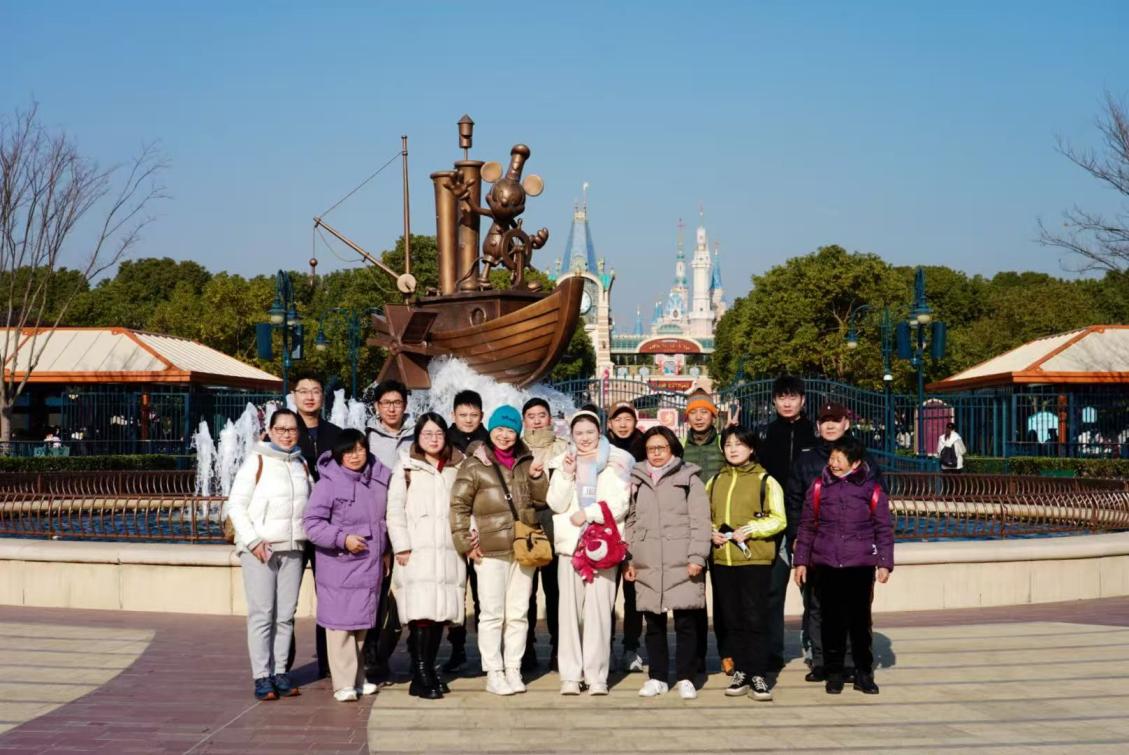
Wu Tong and company employees (back row, first from the left)
Wu moves comfortably among these three worlds. When asked how he manages such a wide span of industries, his answer is surprisingly simple:
“Fundamentally, they’re not that different. You set a goal, find the right people, and solve problems together.”
Whether he is optimizing a piece of equipment, designing a course, or developing a program, Wu believes the underlying logic remains the same: understand real needs and turn solutions into reality.
The BNBU Factor: A Place to Grow Freely, and the Drive to Find Your Own Way
Looking back on his repeated transitions across industries, Wu believes much of his confidence came from his time at BNBU—a period when he was trusted, encouraged to explore, and given room to take ownership of his growth.
BNBU, he recalls, was a place where experimentation was encouraged.
“People didn’t constantly tell you what you ‘couldn’t’ or ‘shouldn’t’ do,” he says. “If you wanted to try something, it seemed like you could always give it a shot.”
That atmosphere made the unknown less intimidating and gradually shaped a mindset of acting first and improving along the way.
During university, Wu was deeply involved in organizing inter-school football competitions. From recruiting players and coordinating training sessions to handling unexpected situations, he was effectively running a small-scale project on the football field.
It became his earliest lesson in management.
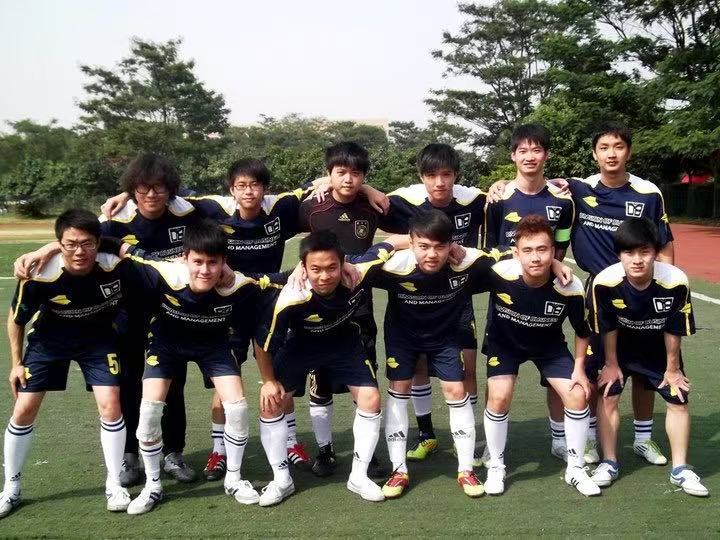
Wu Tong and the BNBU DBM football team, Class of 2008 (back row, first from the right)
His time at BNBU was also an exercise in self-direction.
The university’s English-medium teaching environment and emphasis on independent learning were genuine challenges at first. When textbooks became difficult to understand, he would find Chinese translations and study them side by side. When he encountered problems, he actively sought help from professors or discussed them with classmates.
“The environment forced you to figure things out for yourself and take the initiative to understand,” he says.
Through countless moments of “figuring it out yourself,” he developed a capability that would prove more durable than any particular piece of academic knowledge: when entering a completely unfamiliar field, he could stay focused, quickly identify the right learning path and resources, and trust himself to work through the challenge.
An Entrepreneurial Mindset: Playing the Long Game While Moving with the Current
After several major career transitions, Wu has developed his own perspective on what it means to take the long view. When asked how he stays committed to long-term thinking, he does not turn to grand strategies. Instead, he returns to a simple idea:
“Everyone ultimately reaches the same destination. For me, I just hope that when I look back, I’ll have fewer regrets about the things I wish I had tried.”
He sees work and entrepreneurship as ways to create value and expand the boundaries of his understanding. This perspective helps him filter out much of the anxiety created by short-term uncertainty.
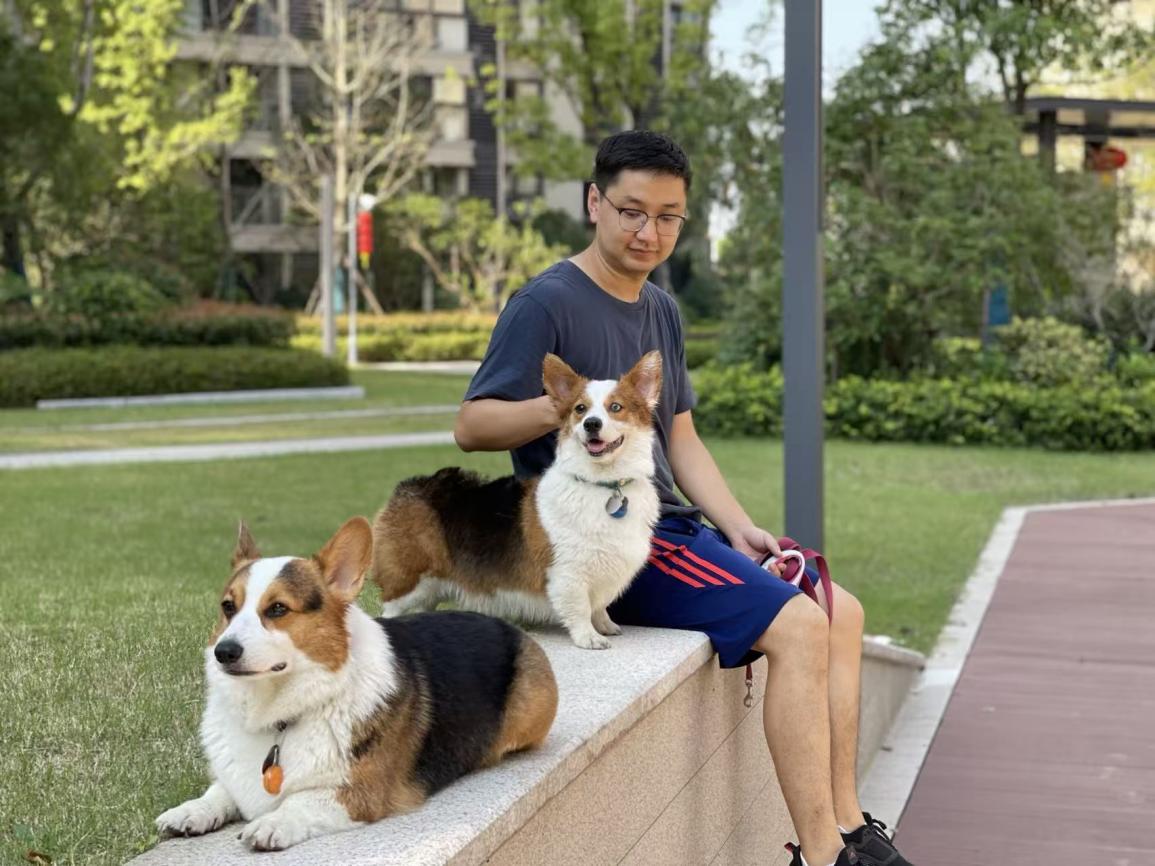
A Life Photo of Wu Tong
For Wu, industries may look different on the surface, but their underlying logic is often similar.
“At the end of the day, you understand a product or service, find the people who need it, and deliver it effectively. Operations and team management are fundamental skills that work almost anywhere.”
Industry-specific knowledge can be learned relatively quickly, he believes. What matters more is the ability to learn quickly, think structurally, persevere through problems, and communicate and collaborate effectively with others.
He also sees artificial intelligence as a major force of change.
“This will definitely be a transformation on the scale of the next Industrial Revolution,” he says. “If you don’t actively learn about it and apply it, you may eventually fall behind.”
But Wu does not pursue AI simply because it is fashionable. His approach is firmly rooted in existing business needs. In manufacturing, he focuses on how AI tools can optimize processes and improve efficiency. In education, his focus is different: how technology can empower learners and help overcome some of the limitations of traditional education.
To him, AI is not an abstract concept floating in the air. It is a practical tool that must ultimately enter real-world scenarios and solve real problems.
Epilogue: If There’s Something You Want to Do, Go Do It
When asked what advice he would give to younger students, Wu recalls a sentence he came across while studying abroad:
“There are some things that, if you don’t do them now, you may never have the chance to do them again.”
The words once inspired him to take a road trip around the United States alone, driving for 44 days.
“If there’s something you want to do, take it seriously and go do it,” he says. “Don’t overthink everything. Let things unfold naturally, and move with the opportunities around you.”
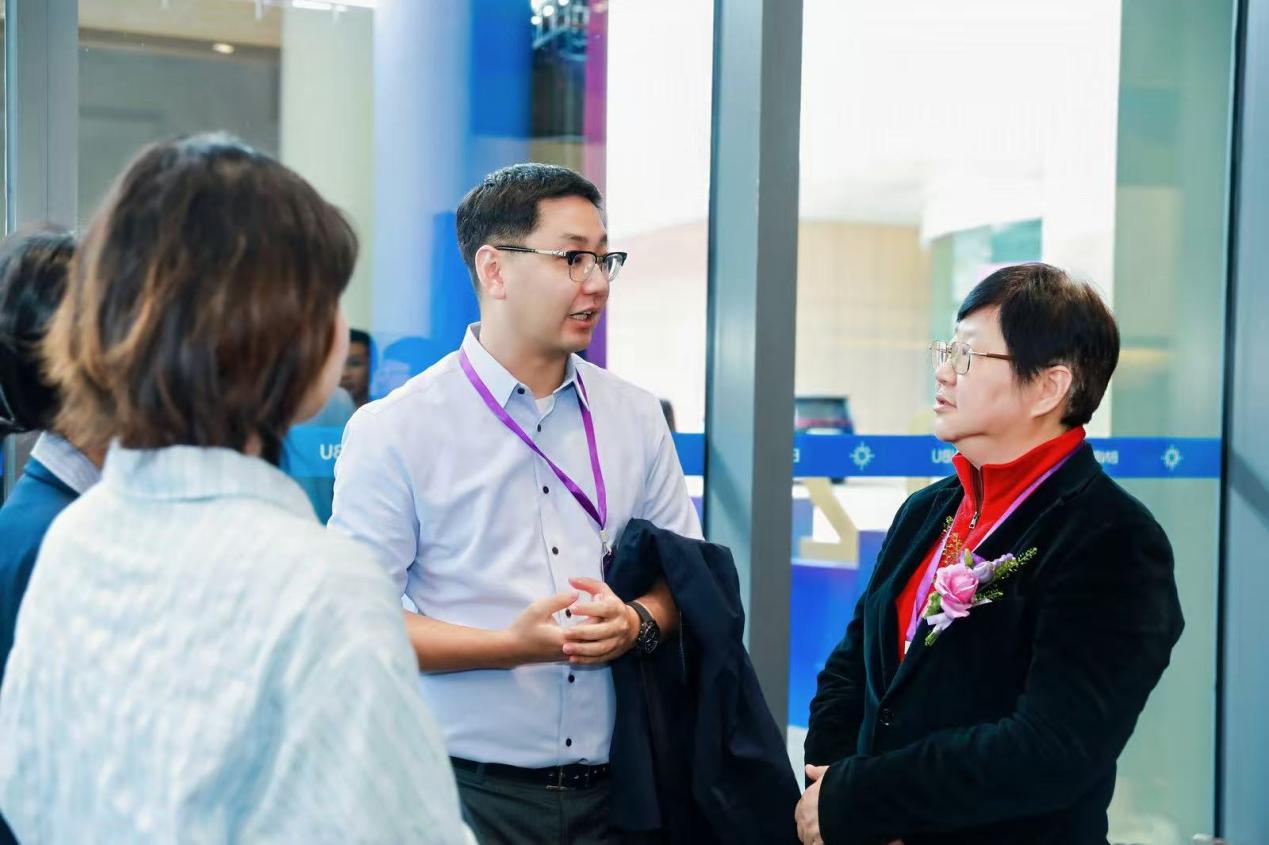
Wu Tong at the Fu Chong Youth Entrepreneurship Forum
From the football fields of BNBU to the classrooms of EF, from the factory floor of a manufacturing company to the emerging world of education technology, Wu Tong’s journey resists easy categorization.
Yet one attitude has remained constant: when things change, learn; when problems arise, solve them; and through practice, keep expanding the boundaries of what you are capable of.
Perhaps it is not the most dramatic story. But it offers something more enduring: a path worth considering.
Stay open through constant experimentation and adjustment. Build the inner strength to keep moving forward. And by solving one concrete problem after another, gradually carve out a path that is truly your own—and firmly grounded in reality.
(Written by Fu Yingzhi, Class of 2023, Media and Communication Studies, BNBU)
【Company Profile】
About the Company
Keevensun Technology Co., Ltd. is a national-level high-tech enterprise established in 2004, with roots in the China Aviation Industry Corporation (AVIC) system. The company draws on aerospace and defense standards in design and quality management, specializing in the R&D, manufacturing, and global delivery of highly reliable industrial equipment and system solutions.
With “Aviation Standards, Independent R&D, Rapid Customization, and Global Delivery” as its core positioning, KEEVENSUN is committed to providing stable and reliable system solutions for industrial clients worldwide.
Industry: Manufacturing — Specialized Equipment Manufacturing; Aircraft Maintenance Services
Locations: Pinghu Manufacturing Base, Zhejiang / Beijing R&D Center Dual-base operations
Alumni Entrepreneurship Stories
Share Your Story with BNBU
Your story. Your alma mater remembers.
No matter where life takes you, your time at BNBU remains a shared treasure.
We look forward to hearing your unique memories and entrepreneurial journey.
To be interviewed, please contact: ic@bnbu.edu.cn