
Alumnus, Class of 2009, Environmental Science
Supervisor, Guangzhou Lanbo Pet Hospital Co., Ltd.
A Founding Student's “Entrepreneurial” Growth
As a member of BNBU's very first class, Gao Ji's growth is closely tied to the university's own startup story.
Twenty years ago, though unhappy with his scores of college entrance examination, he spotted a unique chance in the new BNBU. Its international focus and English immersion matched his strengths. With only five majors offered, he chose Environmental Science based on his biology background.
Gao Ji's university years began with a period of “living under someone else's roof”. “Our first two years were at Beijing Normal University's campus. It felt a bit makeshift,” he laughs. But despite limited facilities, the teachers' care made it special. Leaders worked hard with BNU to create a good environment for their 200 plus students.
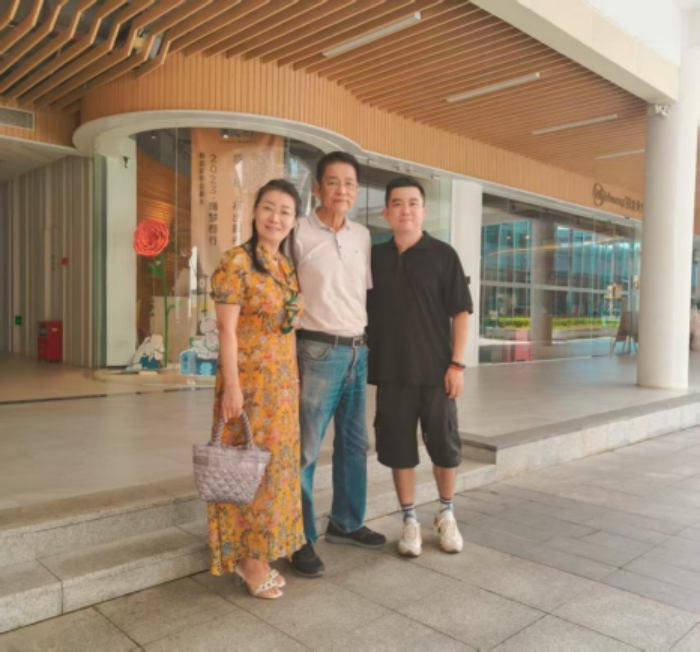
Gao Ji (right) with his mentor Herman Tan and Mrs. Tan on campus
Back then, BNBU had many rules and activity guidelines that needed to be established. Gao Ji threw himself into the university's early development. “Many school systems were blank. We explored with our teachers. Everything we did was a 'first for BNBU'.” As division head, he often met with leaders and teachers to plan events and campus development. From zero to one, he learned the importance of planning and teamwork. This co creation atmosphere influenced many. “Later, many student affairs partners pursued entrepreneurship or creative careers.” Looking back, those days of growing with his alma mater had likely planted the seeds of daring and exploration in their hearts.
Navigating Between Opportunities and Obstacles
Carrying the entrepreneurial seed planted at BNBU, Gao Ji chose Nanyang Technological University as his next academic destination, pursuing further studies in the Technopreneurship and Innovation program. In Singapore at that time, this was a new field. Most instructors were corporate executives and VC/PE veterans. He was impressed. “They didn't give you feel-good advice. They talked about the real pains of startups and taught us risk control and how to avoid traps.” But fresh out of school and naive about business, he listened with youthful innocence. “I thought those risks were far away. I couldn't help but imagine myself as the successful founder.”
After graduation, his entrepreneurial journey began. It was filled with both gifts of opportunity and thorns of risk.
His first startup was a Singapore based HR firm. In 2011, riding China's economic boom and surging flights, he and his partner focused on aviation support services, recruiting Chinese speaking staff for major international airlines. The model was “light and low cost" and ran smoothly. But it failed when his partner fell into gambling and repeatedly embezzled funds. The lesson was harsh. “Company management cannot rely solely on human nature. You must use systems to protect the business.”
After returning to China, Gao Ji worked at a foreign company in Guangzhou, gaining management experience and connections. In 2016, he turned to international education for his second startup. This choice came from a volunteer teaching experience in the US while at BNBU, where Western education concepts deeply inspired him. He felt that China's education was still too exam oriented and lacked space for children's true nature. Meanwhile, Guangzhou had a gap in international kindergartens. So, he targeted high net worth families and founded Sacred Heart International Kindergarten in a prime location. Introducing the International Early Year Curriculum (IEYC) curriculum, the school focused not on isolated skills but on learning habits, character, and overall adaptability. With its differentiation and quality, Sacred Heart quickly won the market, attracting families of Evergrande football players and corporate executives, becoming a shining brand in Guangzhou's high end preschool education.
At that time, no one expected Gao Ji's entrepreneurial journey to face three consecutive blows.
The first came from a policy shift. In 2018, China's revised private education law banned private kindergartens from going public. “We had planned to list in Hong Kong after reaching a certain scale. When the policy came out, all our plans fell apart,” he sighs. With costs rising and the industry declining, he sold part of his shares and partnered with Kids' Brand to open another international kindergarten in Nansha District,
Then the pandemic hit as the second blow. “We could only hold normal classes for about half the year,” he recalls. “Parents' tuition became 'accounts receivable,' not actual revenue. Cash flow was critical. The landlord wouldn't lower rent, and we had to pay teachers. I nearly emptied my own pockets just to keep the doors open.”
The third blow was an industry winter from a sharp drop in birth rates, leading to mass closures of private kindergartens. Under pressure from policy, the pandemic, and demographics, Gao Ji admits responsibility keeps him going. “So many parents trust us with their children. I cannot let them down.” Though tough, he persists.
Seeing few short-term solutions in education, he looked to the promising pet medical field. This shift was not random but based on complementary strengths. His cousin and team, all veterinary graduates from South China Agricultural University, have solid clinical skills but limited business experience. Gao Ji, with his entrepreneurial background, fills that gap, handling strategy, branding, and marketing. They have opened four branches in Guangzhou and expanded to Wuhan. The outlook is strong, with total revenue expected to exceed 15 million RMB this year.
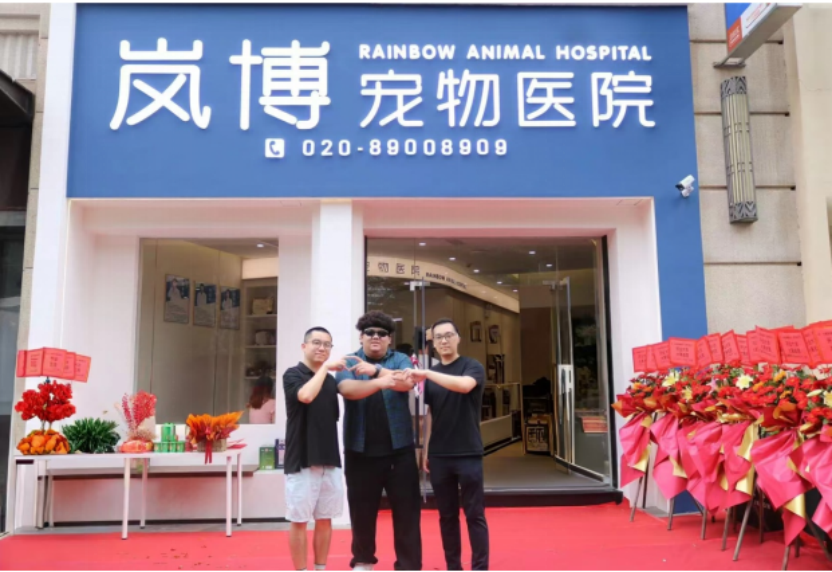
Gao Ji (left) on the opening day of the pet hospital
Finding Your Entrepreneurial Direction in Today's World
Gao Ji's view on innovation and entrepreneurship is practical and clear. “China has few real tech innovators. Areas like AI and EVs need huge funding and elite teams. Ordinary people can't just jump in.”
For young people with limited resources, Gao Ji believes business model innovation and product iteration are more practical than chasing high tech breakthroughs. The former restructures existing business logic. The latter adds new value to traditional products. Both depend on understanding real market needs. He notes that Chinese consumers are shifting from material goods to experiences. Young people now pay for knowledge, culture, and pet services, not luxury brands. “That's the sweet spot for model innovation. Following demand is more realistic than inventing new tech.”
He also highlights BNBU's unique strengths. “Our whole person education and English immersion environment enable us to start global businesses. With trade barriers falling, that's a huge opportunity.”
At the end, Gao Ji sums up his startup journey as " surviving by the skin of my teeth, but full of excitement and challenge.” He laughs, calling himself a practical and grounded entrepreneur. He wants his real-life pitfalls to warn students: “Entrepreneurship is a brave person's game. Success is not certain. First assess your abilities, research the industry, prepare risk controls, then decide. Remember to hope for the best, but plan for the worst.”
From a founding student of BNBU to an entrepreneur who has fought through the trenches, Gao Ji's story may not be a “nonstop success” tale. But it is real, raw, and full of hard-fought emotion. His persistence, shaped by setbacks, carries a truly touching power.
(Written by Jia Qian Tong, Class of 2021, Globalsation and Development, BNBU.)
Guangzhou Rainbow Animal Hospital Co., Ltd.

Guangzhou Rainbow Animal Hospital is a fast-growing professional pet medical provider, well positioned in China's booming pet economy. With multi-site locations (Guangzhou's Haizhu and Tianhe Districts, and Wuhan's Hankou District), differentiated services (English support and potential 24-hour night clinics), and compliant operations, the hospital shows strong growth potential. As China's pet medical market grows at an estimated 20% annually, Rainbow Animal Hospital is on track to become a regional leader.
Core Business: The company's main services include animal diagnosis and treatment, clinic services, veterinary drug operations, pet care, and health consulting, offering one stop services from prevention and treatment to wellness care.
Strategic Positioning: Instead of operating single stores, the hospital has adopted a multi-location chain development strategy to increase brand visibility, expand service coverage, and create synergies. This reflects the management team's clear vision for scalable growth.
Partnerships: Guangzhou Rainbow Animal Hospital maintains close ties with the South China Agricultural University (SCAU) College of Veterinary Medicine and its affiliated teaching hospital. Most founding team members have educational or work backgrounds at SCAU, with some key personnel having previously held or currently holding important positions at the SCAU Veterinary Hospital, such as surgery center director and laboratory department head. This provides strong technical support and talent reserves for the hospital.
Since 2022, Guangzhou Rainbow Animal Hospital Group has operated a total of five pet hospitals, one of which was newly established this year. Last year, the four hospitals achieved a combined revenue of over 10 million RMB with a gross margin exceeding 40%. This year, total revenue is expected to reach over 15 million RMB.
Industry: Pet Medical Industry
Location: Guangzhou, Wuhan
Entrepreneurial Alumni Stories
Share your story. Your alma mater remembers.
Whether near or far, your time at BNBU is a treasure we all share. We look forward to hearing your unique stories. To be interviewed, please contact: ic@bnbu.edu.cn